 info@linsu231.org
 January 28, 2026
LINSU Commemorates 74TH Anniversary with Nationwide Student Outreach, Reviews President Boakai’s SONA, and Lifts VP Kemokai’s Suspension
Comrades and friends, distinguished members of the 6th Post-War National Administrative Council, cadres and ideologues of the National Student Movement, partners and members of the diplomatic corps of Liberia, NGOs and INGOs, members of the press, distinguished ladies and gentlemen.
As the Liberia National Students’ Union (LINSU) commemorates its 74th anniversary this month, it is important that we reflect on the history of our struggle, not merely to romanticize the past, nor to perform ritual nostalgia. We reminisce instead to reassert the national relevance, moral authority, civic and intellectual responsibility of the student movement in the post-conflict reconstruction of Liberia, Africa, and the world-particularly so with the increasing neo-colonial aggression of Western powers against smaller states and nations at a point where global power structures should be advancing the ideals of a free world in a multipolar global political sphere.
Founded in 1952, and legislated into national life as the statutory parent student body in 1957 by an Act of the National Legislature, LINSU refused to exist as a campus club or a ceremonial appendage of power of the day. This noble institution was born in a moment when education became a political privilege, and when students recognized that neutrality in the face of injustice was itself a form of bourgeois compradorism.
Transitioning through different points and eras, LINSU has managed to position itself as a counter-hegemonic force, under ethical and historical duty to interrogate power, disrupt complacency, and articulate the aspirations of those excluded from the narrow corridors of state privilege.
In the formative years of Liberia’s political development, when the True Whig Party monopolized the state, suffocated pluralism, and reduced democracy to ritualized elections without choice, it was the student movement that dared to imagine otherwise and confronted the barbarism of such a backward system. LINSU became one of the earliest platforms where the language of equality, democratic participation, and national inclusion was articulated with temerity, clarity, uncompromising valor, and courage.
Students interrogated Americo-Liberian dominance, challenged the political closure of learning institutions, and exposed the contradictions of a republic that sought to replicate every form of human indignity they had fled in 1821/1822. In doing so, LINSU aligned itself with the broader African intellectual revolt—echoing the student and African people's struggle. From Accra, where Nkrumah transformed independence into a Pan-African project; Conakry, which rejected imperial compromise; and Monrovia, a diplomatic nerve center of early African solidarity, to Dar es Salaam, the undisputed capital of continental liberation hosting movements from Southern Africa, the struggle was coordinated through urban hubs of resistance. Algiers, the Mecca of Revolution, and Cairo, the citadel of anti-imperial thought, offered sanctuary and training of black consciousness. At the same time, Lusaka, Maputo, Harare, Johannesburg, and Soweto bore the scars and triumphs of mass resistance against settler colonialism and apartheid. Even beyond the continent, cities like Havana became external fronts where students, intellectuals, and exiles internationalized the struggle. For LINSU and the Pan-African student movement, these cities symbolize a historic lesson: liberation has always been organized, urban, rural, intellectual, and transnational, driven by students and youth who turned classrooms and learning campuses into command centers and ideas into the machinery of resistance and freedom.
Liberia’s descent into authoritarianism and conflict did not occur in a vacuum. The Doe regime’s militarization of the state, the Taylor era’s warlord absolutism, and the subsequent post-war administrations have each, in different ways, failed to resolve the structural contradictions inherited from the past.
Throughout these periods, the student movement remained present, though sometimes fragmented, sometimes suppressed, sometimes co-opted, but never wavered into cowardice.
Under the illiterate Master Sergeant Samuel Kanyon Doe, LINSU was instrumental in mobilizing students to resist the militarized governance and the erosion of civil liberties in Liberia. Under Taylor, University campuses became contested spaces where intellectual dissent was criminalized. In the post-war era, under Ellen Johnson Sirleaf, George Weah, and now Joseph Nyuma Boakai, LINSU has consistently challenged the substitution of pacifying bureaucratic rhetoric for social justice, and abstract vainglorious macroeconomic optimism for material transformation.
Let it be stated without equivocation that the ill form of governance and backwardness in Liberia has been a structural and systemic problem. It has transcended personalities and regimes. The student movement’s critique has therefore remained materially principled, not partisan, nor on the basis of convenience and comfort.
In the aftermath of war and in our national agenda of post-conflict reconstruction, our definition of peace, often too narrowly, has been the absence of gunfire rather than the presence of justice, equity, and decent livelihood. LINSU, unlike institutions desirous of appeasing the reactionary neoliberal status quo, however, understands peace as inclusive development, democratic participation, and human dignity.
Today, we can safely say that the student movement isn't just advocating. It is rather a pragmatic vehicle for driving capacity development, policy advocacy, and is a strategic stakeholder in post-conflict reconstruction. Across Liberia, students are contributing to civic education, election monitoring, peacebuilding, digital innovation, environmental advocacy, and policy research. The student movement has evolved into an incubator of ideas, shaping debates on governance, decentralization, education reform, and economic justice.
In addition, the recent State of the Nation Address presents a familiar script in our recent history. Impressive rhetorical growth rates, optimistic projections, and confident political declarations of progress. From the perspective of critical inquisition, LINSU seeks to ask a few questions: What has changed here? Which sector can we confidently say is structurally functional? Growth for whom? Stability at what cost? Progress measured by which indicators?
From the little we've read on the basics of economic growth, Macroeconomic aggregates mean little when students cannot afford tuition, when graduates roam unemployed, when public universities remain underfunded and infrastructure lies in ruins, and when inequality deepens beneath statistical averages.
Hence, we are obliged to caution the state against governance by the measure of partisan performance theatrics between the in-position and the opposition, where administrations compete with their predecessors and opponents in what can only be described as fun fare intended to flex propaganda calisthenics. Governance should mean far more than intellectual warfare. It is a social contract—a binding moral and political agreement in which the state exists to translate authority into material improvement in the lives of the people. Liberians do not eat hallucinated GDP figures, and students do not graduate into fiscal projections or beautiful English; they graduate into labor markets, rent prices, tuition bills, and survival economies. When growth statistics expand while access to education even on the outskirts of the capital remains a challenge, when macroeconomic instability coexists with youth unemployment and institutional decay, the social contract is not merely strained—it is violated by the duty bearer (Government). Material transformation is therefore the true measure of governance: schools that function, degrees that lead to work, healthcare that preserves dignity, and policies that reduce the daily cost of living. Propaganda dominance may win political debates, but only tangible outcomes renew legitimacy. In the end, states are not sustained by how well they argue their success, but by how deeply their people can feel it in their livelihood.
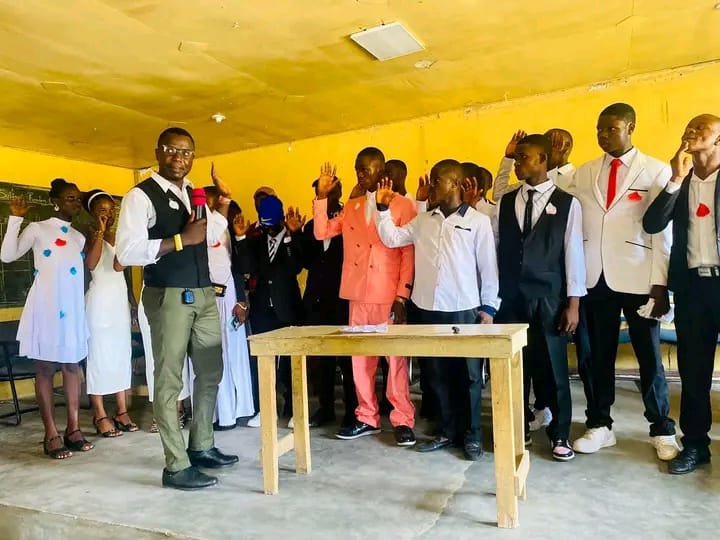
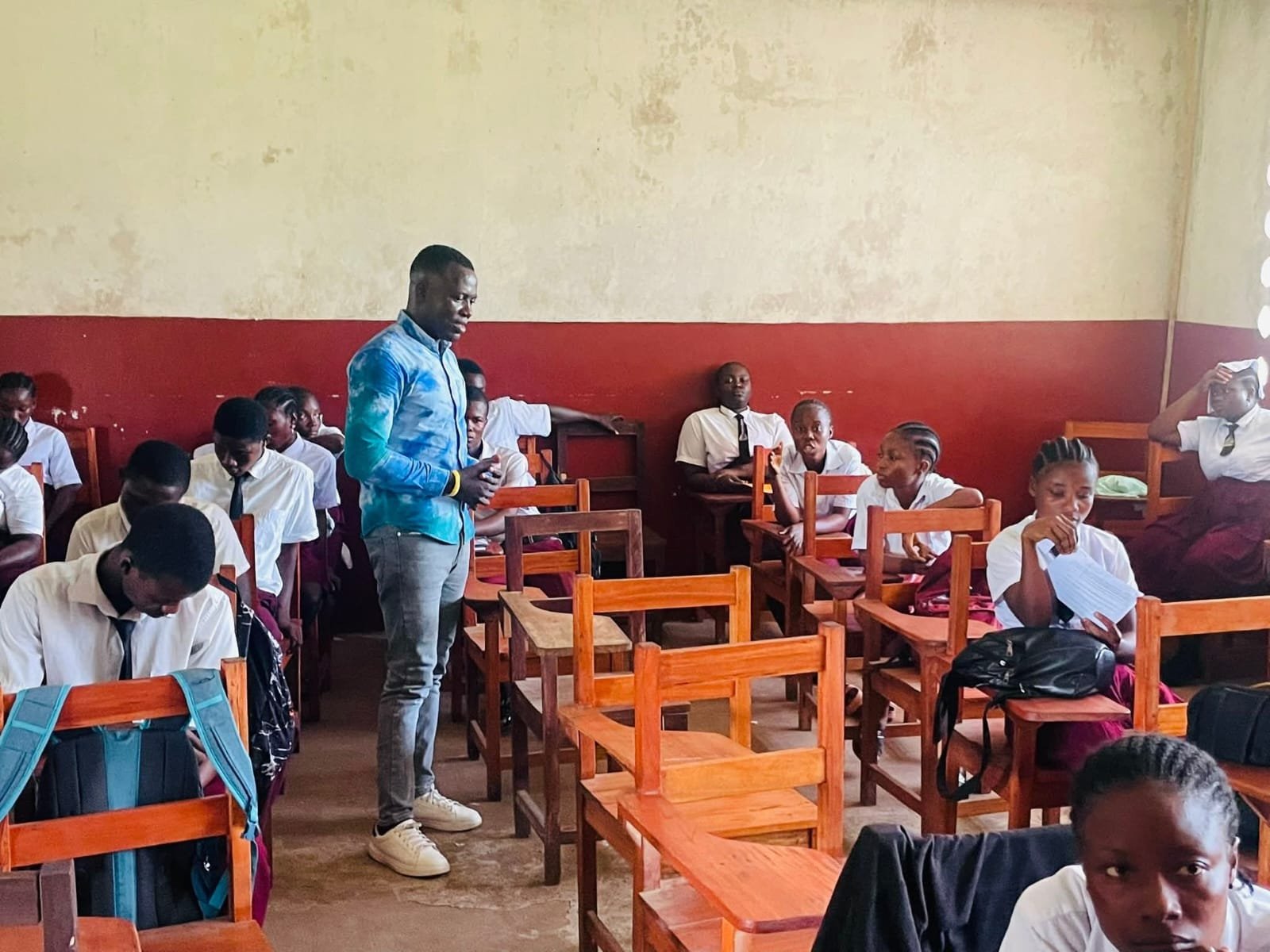
In response to the widening gap between political rhetoric and lived realities, LINSU is launching a nationwide grassroots mobilization and outreach initiative as part of this anniversary observance.
This exercise will systematically engage students and communities to document lived experiences, socio-economic conditions, and institutional failures. The data generated will be used for rigorous policy advocacy, ensuring that student interventions are grounded not in fine speeches, but in evidence and practical systemic approaches.
With the growing wave of policy hallucinations, LINSU will referee the intellectual debate with empirical clarity.
Meanwhile, the 6th Post-War National Executive Committee has convened and resolved to recall Comrade Abdullah Randolph Kemokai as Vice President for International Affairs, following the completion of his suspension for acts inimical to institutional norms, discipline, and traditions.
This decision reflects LINSU’s understanding that our institutions should survive if not by perfection, but by principled correction.
At over seven decades old, LINSU remains what it has always been: uncompromising, unrelenting, and unapologetic for its position in history. We do not seek comfort in power, nor validation from the status quo. Our duty is not to operate as an echochamber to backward systems, but to question them. Where governance serves the people, we will support it as partners in progress. Where it fails, we will resist it, with ideas, organization, and disciplined struggle.
In the cause of the people, the struggle continues!
Done and issued by and through the mandate of the 6th Post-War National Executive Committee, on this 28th day of January, A.D. 2026.
 January 27, 2026